

Currently Empty: $0.00
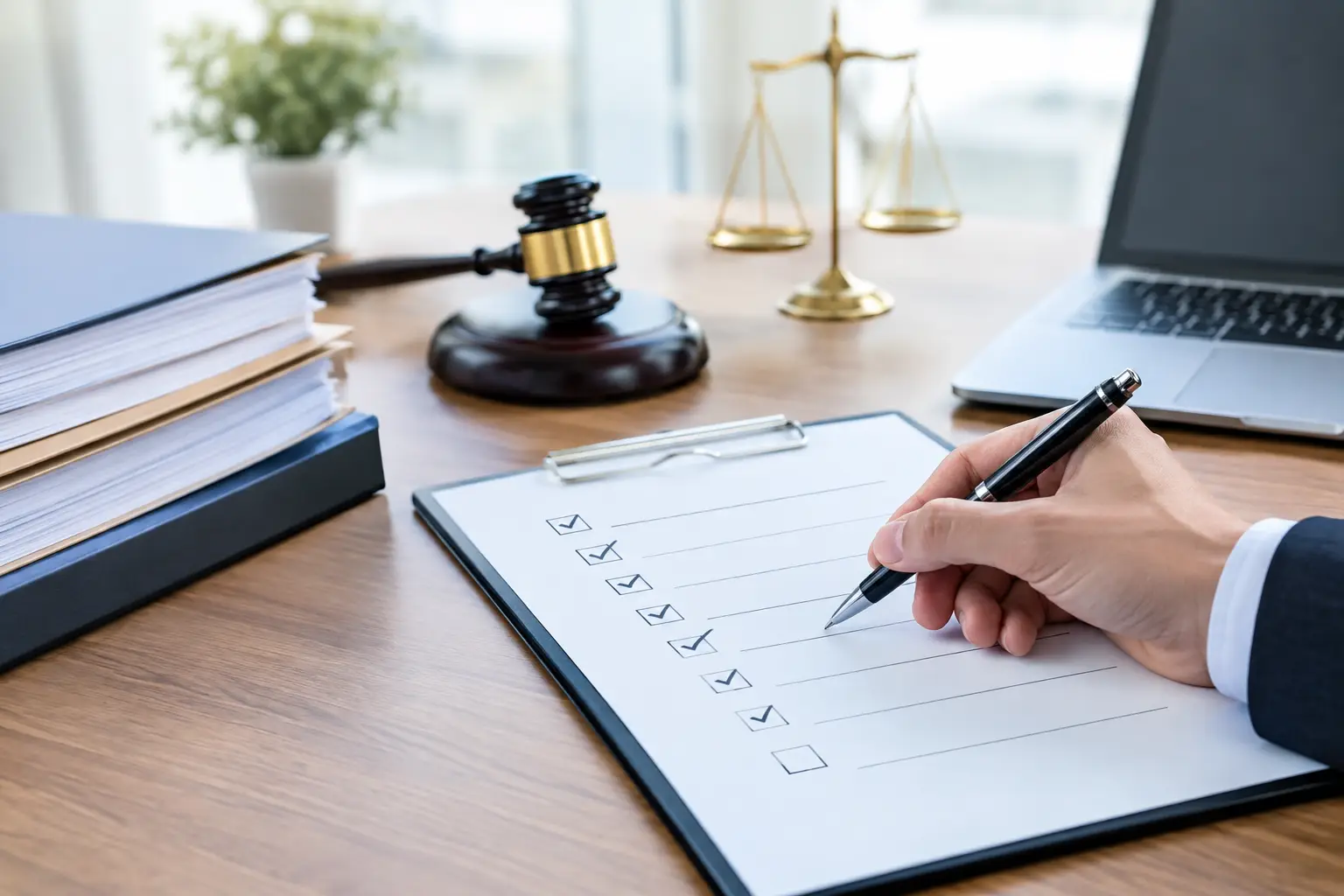
A court case can turn on a page you never filed, a deadline you counted wrong, or service you cannot prove. That is why court filing checklists are not busywork. They are your control panel when the other side, the clerk, and the judge all expect you to know what happens next.
If you are representing yourself, stop treating each court document as a one-time event. Every filing creates a chain: prepare it, sign it, file it, pay or request a fee waiver, serve the other side when required, preserve proof, calendar the response date, and prepare for the next move. Miss one link and you may spend weeks trying to repair damage that a checklist could have prevented.
Why court filing checklists matter
Court procedure is not designed to slow you down personally. But it does reward the party who follows the rules, preserves a record, and can prove what they did. A clerk may reject a filing for a missing signature, incorrect caption, improper format, or unpaid fee. The opposing party may claim they were never served. A judge may deny relief because you asked too late or failed to bring evidence into the record.
None of that means your position is weak. It means procedure matters as much as the facts. A strong argument sitting in your kitchen does nothing. A properly filed, properly served document puts your argument where the court can act on it.
Your checklist should reduce panic by turning a large legal problem into the next verifiable action. You do not need to know every rule in every courtroom on day one. You do need a disciplined way to identify the rule that controls your next deadline and document it before time runs out.
Build one checklist for each filing
Do not keep a single vague note that says, “File motion.” Make a separate checklist for every document you submit. A motion, answer, petition, objection, appeal notice, request for hearing, or proposed order may each have different requirements.
Start with the case identification. Confirm the court name, division or county, case number, names of the parties, and the exact title of your document. Copy this information from the most recent court paper rather than relying on memory. A caption error can create needless delay, especially when multiple cases or parties are involved.
Next, identify the authority for the filing. That could be a summons stating your answer deadline, a court order setting a hearing, a statute, a local rule, or a state rule of civil procedure. Write down the source and the exact due date. Do not write only “due Friday.” Write the date, time if applicable, and how you calculated it.
Then track the document itself: the required form or format, supporting declaration or affidavit, exhibits, proposed order, certificate of service, and any cover sheet required by that court. Some courts require exhibits to be labeled, bookmarked, or separately uploaded. Others require a specific notice of hearing or a meet-and-confer statement. The court’s rules control, not what worked in somebody else’s county or on a random internet video.
A practical filing checklist should also include these proof items:
- A final PDF or paper copy of exactly what you filed
- The clerk’s file stamp, e-filing receipt, or confirmation number
- The filing-fee receipt or approved fee-waiver paperwork
- The service method, date, recipient, and address or email used
- The certificate, affidavit, or other proof of service
- The next response deadline, hearing date, or follow-up task
Keep these records in one case folder, both digitally and on paper if your court uses paper filings. Name digital files so you can find them under pressure: `2026-09-28_Defendant_Answer_Filed.pdf` is better than `finalfinal2.pdf`.
Know the difference between filing and service
Filing gives the document to the court. Service gives notice to the other side. They are related, but they are not the same task.
Many self-represented litigants correctly upload a motion, receive an electronic filing receipt, and assume the job is done. Then the hearing arrives and the judge asks whether the opposing party was served. If you cannot show the required method and date of service, the court may continue the matter or decline to consider your request.
The right service method depends on the court, the stage of the case, and the document. Initial papers often require formal service. Later filings may be served by mail, e-service, or another method permitted by the rules. Do not guess. Put the applicable service rule on your checklist and save the proof when you complete it.
Calendar backward, not just forward
A deadline is rarely one task. It is the final stop in a process. If your response is due on the 20th, you may need time to research, draft, gather exhibits, print or convert files, arrange service, correct a rejected e-filing, and file before the clerk’s cutoff.
Work backward from the deadline. Set a drafting deadline several days earlier. Set a separate date to review the court’s local rules. Set another date to serve the document. Leave a cushion for technical failure, missing records, or a clerk’s correction notice.
This is especially important in foreclosure, debt-collection, family-law, and administrative cases, where early deadlines can shape the entire case. An answer filed late may lead to default. A missed appeal deadline may end review. A hearing request submitted after an agency deadline may never be heard. The rule is simple: calendar the deadline the day you receive a court paper, not when you feel ready to deal with it.
Use the court’s own rules as your final check
A checklist is only as good as the rules behind it. State rules, federal rules, local rules, standing orders, and the judge’s procedures can all matter. There is no universal checklist that safely covers every court filing in the United States.
Before filing, check whether the court requires a particular font, page limit, line numbering, exhibit format, courtesy copy, hearing reservation, or mandatory form. Confirm whether weekends and holidays count in your deadline calculation. Some deadlines run from the date a document was filed; others run from the date it was served. Those are not interchangeable.
If the clerk cannot tell you how to make a legal argument, that does not make the clerk useless. Clerks can often provide procedural information, point you to forms, and explain filing mechanics. Ask clear questions: “Is e-filing mandatory for a self-represented party in this case type?” or “Does this motion require a notice of hearing?” Do not ask the clerk whether you should file the motion.
Make your checklist work at the hearing too
Court filing checklists should not end when you hit submit. A hearing checklist protects you from showing up with no copy of your motion, no exhibit list, and no idea what relief you requested.
Bring filed copies of the key documents, your exhibits, proof of service, the relevant court order, and a short outline of what you need the judge to do. If you filed electronically, do not assume the courtroom will have every attachment open and ready. Have your materials organized so you can locate a page quickly when the judge asks.
Also write down what happens after the hearing. Was a ruling made from the bench? Is a written order coming? Did the judge set a deadline to submit something else? Before leaving, record the date, the instruction, and the person responsible for the next step. If you do not understand a procedural instruction, ask respectfully before the hearing ends.
Do not use a checklist to avoid judgment
A checklist will not decide which claims to bring, what defenses fit your facts, or whether settlement makes more sense than continuing. It cannot turn weak evidence into strong evidence. It also cannot replace competent legal counsel when you can afford counsel and your matter calls for it.
What it can do is stop preventable losses. It gives you a system for acting on your own facts, preserving your proof, and meeting the court where the court operates: on the record, on time, and in the required format.
Pro Se Legal School provides education, document tools, and coaching for people who choose to handle their own cases. It is not a law firm, does not provide legal advice, and cannot guarantee any result. Your case remains your responsibility. That is not a weakness. With organized records, a real deadline system, and a filing checklist you actually use, it is the point where you take control.







How to Challenge Affidavit Evidence in Court
[…] the other side is moving for summary judgment, understand the danger. In federal court, Rule 56(c)(4) requires an affidavit or declaration used […]
Mediation Versus Foreclosure Sale: Your Next Move
[…] review. Those facts can matter in court. But mediation is not a substitute for filing a timely answer, opposition, motion, or request for a hearing when one is […]