

Total: $1,849.00
Original price was: $600.00.$200.00Current price is: $200.00.
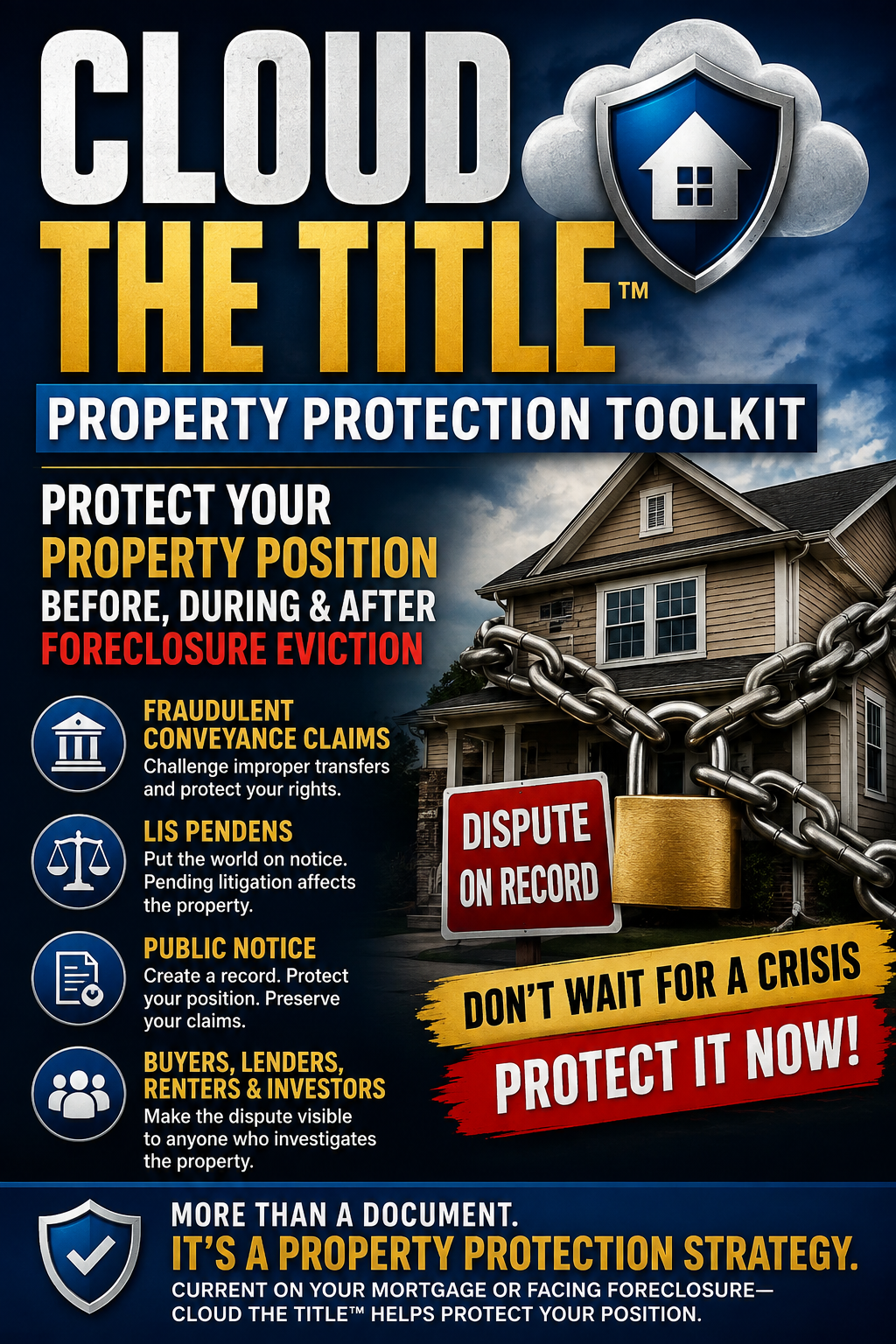
Cloud The Title™ Property Protection Toolkit
This Package helps property owners protect their position before, during, and after foreclosure eviction. Learn how fraudulent conveyance claims, Lis Pendens, public notice, and the public record can help protect your property position, challenge disputed transfers, put buyers on notice, and address attempts to sell or use disputed property as a rental.
The Cloud The Title™ Property Protection Toolkit is designed to help property owners protect their property position through fraudulent conveyance claims, public notice, Lis Pendens, litigation, and the public record. This product is not limited to people already facing foreclosure or eviction. A private property owner can be current on the mortgage and still use this package as a property-protection strategy before foreclosure, a disputed transfer, an attempted sale, or rental registration becomes the problem.
Most property owners insure everything. They carry homeowners insurance, make their mortgage payments, pay property taxes, maintain the property, make repairs, and do the things responsible property owners are supposed to do. Title insurance may also be part of the transaction when property is purchased.
But how many property owners ever stop and ask: What am I doing to protect my own position in the public record?
That is a completely different question.
A lender’s title insurance policy protects the lender’s financial interest. An owner’s title insurance policy, when purchased, may protect the buyer against certain covered title defects under the terms of that policy. But insurance is not the same thing as the property owner establishing and protecting their own position when they contend that a conveyance, foreclosure, deed, transfer, or ownership interest is being challenged or wrongfully changed.
Meanwhile, banks record documents protecting their interests. Lenders record their interests. Buyers and investors record documents establishing their claimed interests. Foreclosure documents, assignments, deeds, liens, transfers, and other property documents become part of the property’s public record.
Yet most private property owners have probably never been taught to ask:
Should I have a strategy for protecting my own position in the public record before something happens?
That is one of the central questions behind Cloud The Title™.
One of the biggest benefits of this property-protection strategy is that you do not have to wait until you are behind on your mortgage or facing foreclosure. You can be completely current on your mortgage and still have a reason to protect your property position.
The same applies if you own the property outright, own rental property, own commercial property, have inherited family property, or simply want to understand how to protect your property before a dispute develops.
Most people don’t start thinking about these issues until a foreclosure notice arrives, a deed changes, somebody claims ownership, or another transaction involving the property occurs. Cloud The Title™ is designed to move that education forward—before the emergency.
Instead of asking what you can do after everything happens, the better question may be: What can you do while you still own and control the property?
Banks record documents protecting their interests. Lenders record documents protecting their interests. Buyers and investors record documents establishing their claimed ownership. Those records can include mortgages, assignments, deeds, liens, foreclosure documents, transfers, releases, and other instruments affecting the property.
The property owner may spend decades paying for and maintaining the property without ever considering whether they need their own public-record strategy.
When ownership, a conveyance, foreclosure, or another property interest becomes disputed, that changes. Buyers investigate the record. Lenders investigate the record. Investors investigate the record. Title companies investigate the record.
The question becomes: What does that record say about your position?
This package is designed to help the property owner establish and preserve their claimed position instead of waiting until everyone else involved has already created the record.
A property owner who is current on the mortgage does not have to wait for a foreclosure notice before learning how this strategy works. The package provides documents and education for understanding the property record, identifying disputed transactions or conveyances, preserving the owner’s position, and preparing the lawsuit and related documents used to challenge a property transaction.
This is an important part of the added value of Cloud The Title™. Property protection does not have to begin with foreclosure defense. It can begin while the owner is still current, still possesses the property, and still has time to understand what is happening before a crisis develops.
The idea is simple: Don’t wait until you are fighting to get the property back to start thinking about protecting it.
When disputed property changes hands, the next move may not be another immediate sale. Someone may attempt to register the property as a rental, place tenants in it, hire a property manager, collect rent, and begin treating the property as an income-producing asset.
That is another reason the public record matters. If you are challenging the ownership, foreclosure, or conveyance, establishing that dispute can force the property controversy into the picture when someone attempts to move forward as though ownership has already been settled.
Think about what that means. They may have possession of the property, but that does not make your dispute disappear.
If another party wants to register, manage, or operate disputed property as a rental, the existence of your lawsuit and property claim can become another issue they have to deal with. Cloud The Title™ is designed to help make sure your position is not invisible while someone else attempts to turn disputed property into their rental business.
A disputed property can become much more complicated when another buyer enters the picture. Once someone attempts to sell or transfer the property again, buyers, lenders, investors, attorneys, and title companies may begin investigating the transaction.
What are they going to find when they investigate the property?
If everybody else’s documents are in the public record and your claimed dispute is nowhere to be found, the transaction can appear very different than it does when pending litigation and appropriate public notice show that ownership, the conveyance, or another property interest is being challenged.
That is one of the central purposes behind Cloud The Title™. You are not simply arguing with the person who currently claims the property. You are creating notice for the people who may come next.
The next buyer should encounter the dispute. The next lender should encounter the dispute. The next investor should encounter the dispute. The title investigation should encounter the dispute.
If they’re trying to move disputed property to somebody else, your position should not be invisible.
Fraudulent conveyance law addresses certain transfers that may be challenged because of the circumstances surrounding the transaction. When a property owner contends that a transfer, deed transaction, foreclosure-related conveyance, or other property transaction was improper, the conveyance itself can become part of the controversy.
The fraudulent conveyance lawsuit is designed to put that controversy into a claim. The property owner identifies the transaction being challenged, states their claimed property interest, creates a record of the dispute, and seeks relief concerning the disputed conveyance.
This is an important distinction. Cloud The Title™ is not simply about recording a random document against property. The lawsuit and the claimed property dispute are the foundation of the strategy.
A Lis Pendens provides public notice of pending litigation involving an interest in real property when the applicable law permits its use. It connects the pending property litigation to the public record and alerts people investigating the property that litigation affecting the property exists.
That can matter when another buyer, lender, investor, or title company begins investigating the property. Instead of seeing a record that appears to contain no pending dispute, they can encounter notice of the litigation affecting the property.
The lawsuit establishes the property controversy being asserted. The Lis Pendens provides public notice of that pending property litigation.
The lawsuit and the public record work together.
The broader property-protection strategy does not eliminate the original foreclosure purpose of this package. If foreclosure has already begun, the documents can be used to challenge disputed conveyances, establish the owner’s claimed position, create notice, preserve claims, and seek court intervention.
If foreclosure eviction has already occurred and the property has been transferred, the former owner may still want to challenge the conveyance and establish that the property transaction remains disputed.
This gives Cloud The Title™ value at different points in the property dispute: while the mortgage is current, while foreclosure is occurring, and after foreclosure eviction and a disputed transfer have already taken place.
📄 Notice Of Fraudulent Conveyance
Places your position into the public record and identifies disputed transfers, conveyances, or ownership claims.
📄 Lis Pendens
Creates public notice that litigation affecting the property is pending and alerts future parties to the existence of a dispute.
📄 Demand Letter To Buyer
Places interested parties on notice and eliminates future claims that no warning was provided.
📄 Property Rights Protection Documents
Designed to preserve and protect your position concerning disputed property interests.
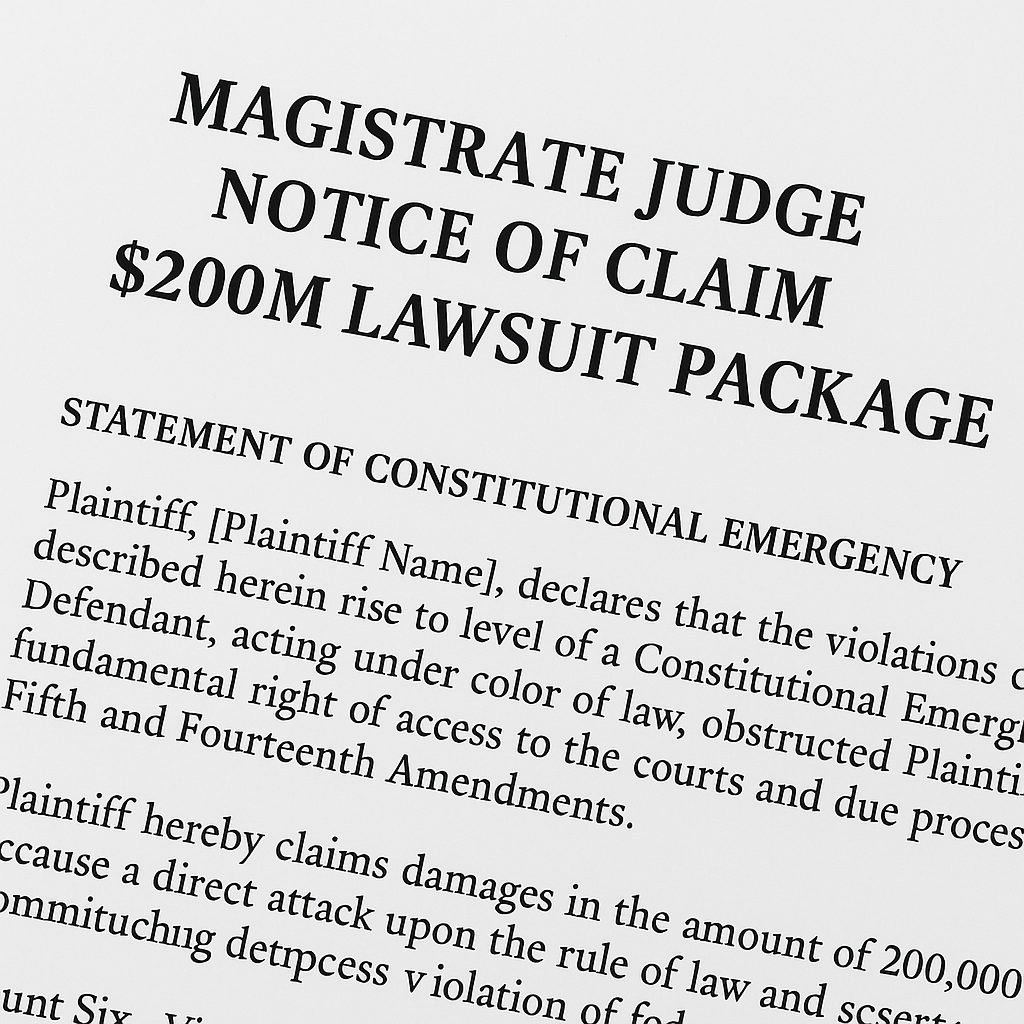
📄 Federal Complaint
Provides a framework for bringing property-rights claims into federal court.
📄 Emergency TRO And Preliminary Injunction
Provides documents used to request immediate court intervention when ongoing harm is occurring.
📄 Counterclaim Documents
Allows property owners to raise claims within existing litigation already affecting the property.
📄 Public Record Preservation Documents
Creates a documented timeline supporting your position and preserving important claims.
📄 Civil Cover Sheet JS-44
📄 Federal Summons Documents
📄 Certificate Of Service
📄 Step By Step Recording Instructions
You are not purchasing a single document, and you are not purchasing something that only becomes useful after foreclosure starts. The documents work together as a property-protection system designed to help the owner place their position into the public record, create notice of a property dispute, preserve evidence and claims, challenge disputed transfers, notify interested parties, support requests for court intervention, and establish a documented history concerning the property.
The added value is the timing. A property owner can be current on the mortgage and begin protecting their position. The package can also be used when a property dispute develops, when someone attempts to sell or transfer disputed property, when the property is being treated as rental property, or after foreclosure eviction and a disputed conveyance have occurred.
The Cloud The Title™ Property Protection Toolkit is designed for homeowners who are current on their mortgage, homeowners facing foreclosure, former homeowners challenging a foreclosure eviction or transfer, people who own their property outright, landlords, rental-property owners, commercial-property owners, real estate investors, owners of inherited or family property, and people challenging a disputed transfer, conveyance, foreclosure, ownership claim, or other property-rights dispute.
Think about family property for a moment. Your parents or grandparents may have spent decades paying the mortgage, paying taxes, making repairs, maintaining the property, and building something they intended to keep in the family. Protecting that property should not begin only after somebody else claims control of it.
Most property owners haven’t.
People insure their homes. They lock the doors. They install cameras. They make repairs. They pay the mortgage. They pay the taxes. They protect the physical property year after year.
But almost nobody asks: How am I protecting my position in the public record?
You shouldn’t have to wait until you’re behind on the mortgage to start asking that question. You shouldn’t have to wait until foreclosure eviction. You shouldn’t have to wait until somebody attempts to register the property as a rental. And you shouldn’t have to wait until another buyer is standing there claiming the property belongs to them.
Cloud The Title™ introduces a different way of thinking about property protection.
Maybe you’re current on your mortgage. Maybe you’ve owned the property for 20 years. Maybe it’s family property. Maybe it’s a rental. Maybe you’re already fighting foreclosure eviction. Maybe somebody already claims they bought it.
Whatever brought you here, there is one question worth asking:
Everybody knows how to insure their property. But have you ever thought about protecting your position in the public record before you need it?
That is the question most property owners probably never knew they needed to ask.
Cloud The Title™ Property Protection Toolkit helps property owners protect their position before, during, and after foreclosure eviction. Learn how fraudulent conveyance claims, Lis Pendens, public notice, and the public record can help protect your property position, challenge disputed transfers, put buyers on notice, and address attempts to sell or use disputed property as a rental.
Cloud the title, property protection, fraudulent conveyance, lis pendens, foreclosure eviction, property rights, public record, disputed property, rental property, property ownership dispute
Only logged in customers who have purchased this product may leave a review.





There are no reviews yet.